

Hollywood Gets AI-curious
So far audiences are warning against it

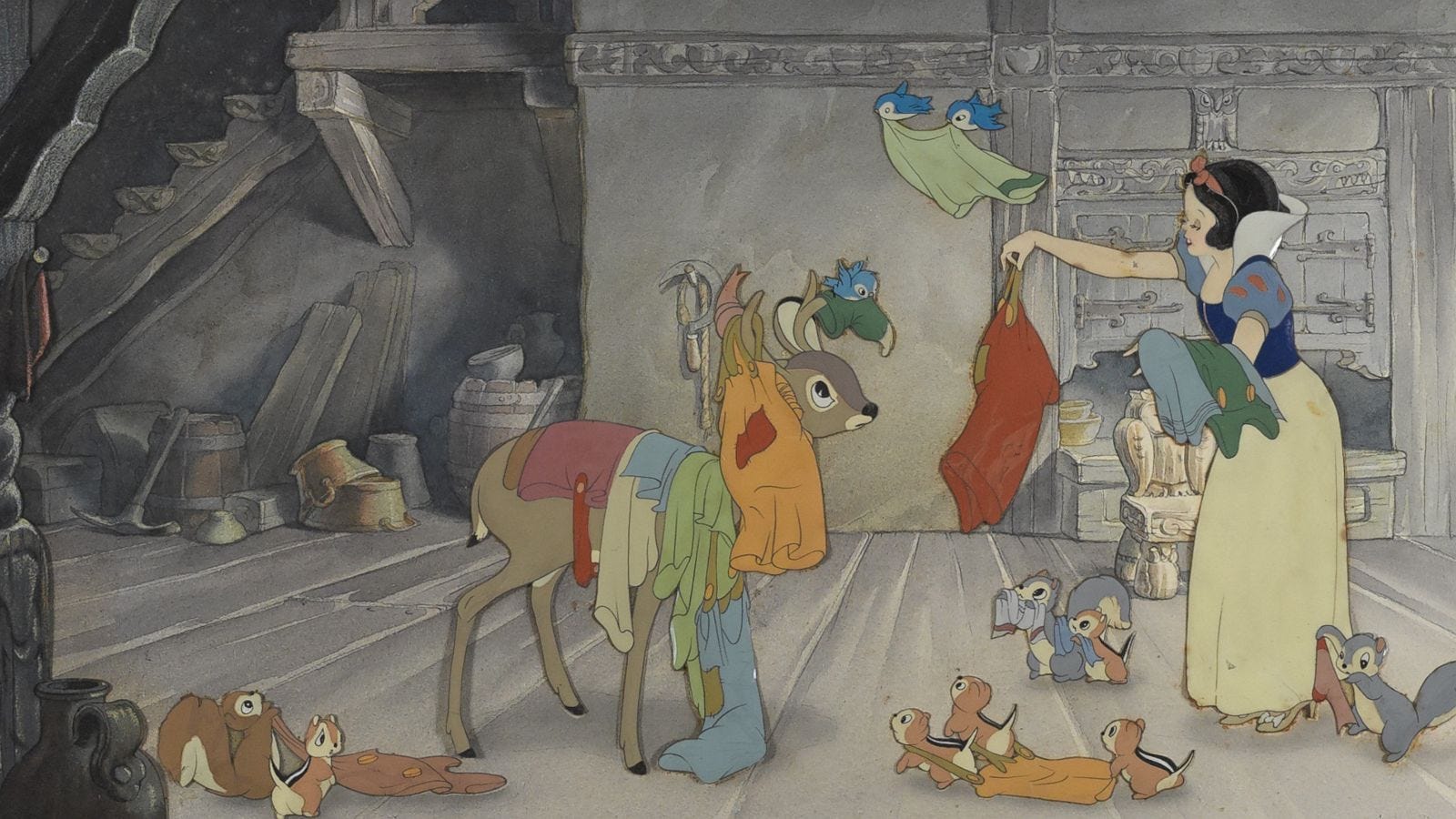
With companies like OpenAI and Anthropic raking in tons of money and as the legacy movie studios falter, some in Hollywood are looking to AI for a lifeline.
In December of 2025, Disney announced a $1 billion investment in OpenAI, which would allow users to freely use their copyrighted characters however they’d like within its generative AI video app, Sora.
As Matt Belloni explained on his podcast The Town:
This was put out there as part of the future of the Walt Disney Company… [Sora] was an app that was so potentially disruptive that it got Disney interested in doing a big partnership. “We have to meet people where they are….” Hollywood freaked out for a few months.
And then at the end of March, just after Disney’s new CEO Josh D’Amaro had taken the reigns, OpenAI announced it was discontinuing Sora completely.
Tech reporter Alex Heath explained that OpenAI is an arms race with Anthropic, and the allocation of their GPUs is too valuable at the moment to spend on “side quests,” as one executive called it. Their priority is in coding—not in video or entertainment:
I was just up [in San Francisco] yesterday at OpenAI. And the way that the tech companies in the AI labs feel about the entertainment industry… let’s just say they don’t think about it as much as the entertainment industry thinks about them.
This is at least embarrassing for Disney, if not Hollywood in general. With the possible exception of the potential merger between Paramount and Warner Brothers, the biggest topic in Hollywood these days has to be AI.
But why exactly did tech companies develop a lot of generative-AI video apps (Runway, Veo, Luma, etc.) if they didn’t intend to do anything with them?
Sci-fi writer Cory Doctorow gives his answer to that question in a piece written for The Guardian. He wrote:
On average, illustrators do not make any money. They are already one of the most immiserated, precarious groups of workers out there. If AI image-generators put every illustrator working today out of a job, the resulting wage-bill savings would be… less than the kombucha bill for the company cafeteria at just one of OpenAI’s campuses.
The purpose of AI art—and the story of AI art as a death knell for artists—is to convince the broader public that AI is amazing and will do amazing things. It is to create buzz.
“AI companies trying to create buzz” would seem to explain some of the more head-scratching stories coming out of Hollywood right now.
Director Darren Aronofsky (Black Swan, The Whale) made headlines for creating an entire series on YouTube out of AI, related to the Revolutionary War, called This Day… 1776. Reviews online were not kind: “garbage,” “slop,” “a waste of time.” One asked, “Why the hell did such a good director decide to throw it all away for utter trash?”
The answer to that could potentially be found in the partnership he formed with Google DeepMind and the backing they received from Salesforce for some “undisclosed amount.”
Ben Affleck is another example of a Hollywood A-lister publicly supporting AI right now. In January 16th of this year, he went on Joe Rogan’s podcast to share his thoughts:
It feels to me like… we have this sense of existential dread. It’s going to wipe everything out. But that actually runs counter, in my view, to what history seems to show, which is adoption is slow, it’s incremental…
The way I see the technology and what it’s good at and what it’s not, it’s going to be good at filling in all the places that are expensive and burdensome and they make it harder to do it. It’s always going to rely fundamentally on the human artistic aspects of it.
He said a lot of things (the episode is two and a half hours), but one thing he didn’t mention was that he’s been quietly developing an AI company of his own, called InterPositive. A few weeks later, news hit that Netflix was acquiring it for $600 million.
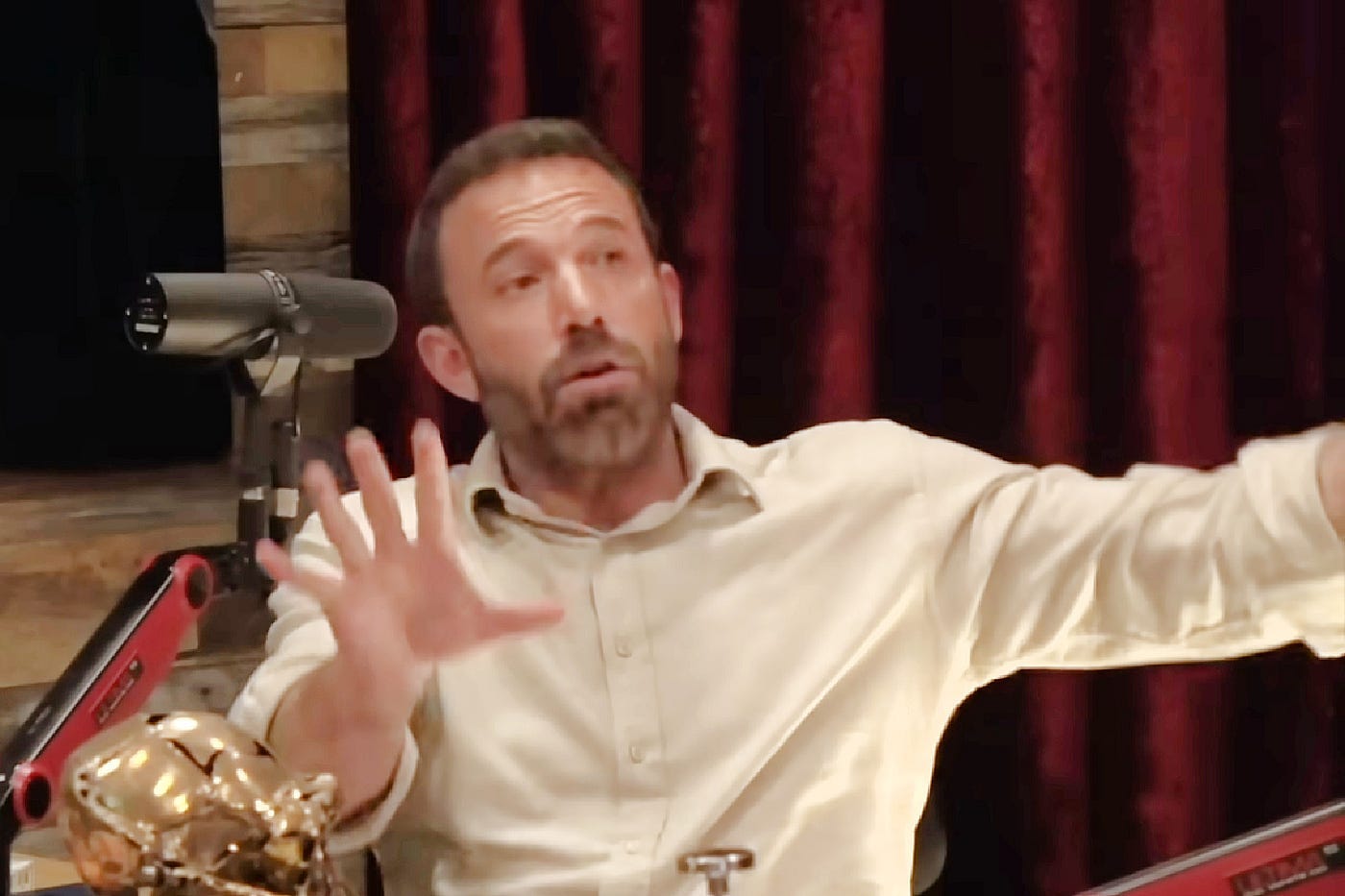
According to NPR, this software will “help filmmakers to build their own, proprietary AI models based on the scenes they’ve already shot, and then use that data to help solve otherwise laborious details” (just like he predicted on Rogan!).
Since it will be used exclusively at Netflix, audiences will be left to wonder what’s real and what’s not real while watching their shows. So far people seem highly sensitive to anything with AI in it at all, so at the very least, pressure will be on those filmmakers to make it as undetectable as possible.
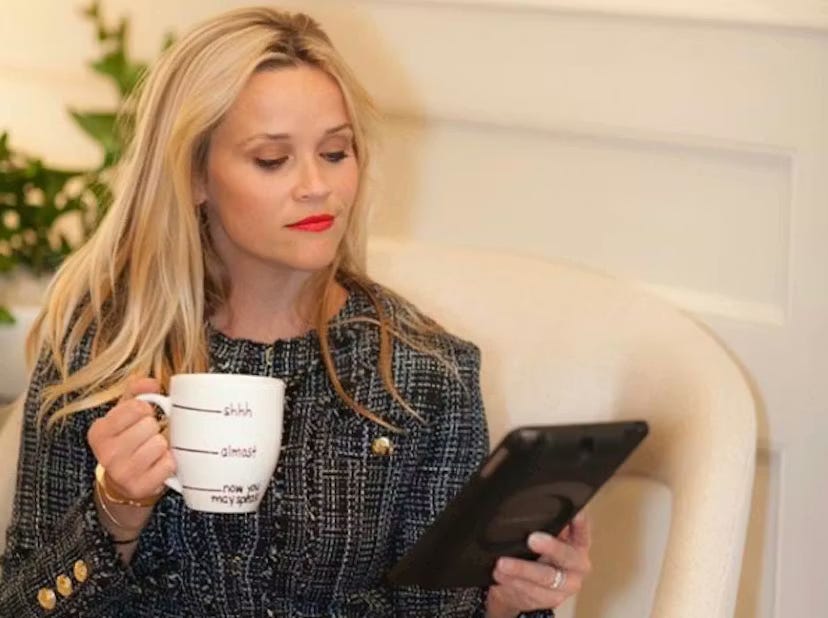
Somebody who is reportedly not making money on AI right now is Reese Whitherspoon. She posted:
The AI revolution has begun, and I need to learn as much as I possibly can about AI and share it with all of you. Also, FYI: the jobs women hold are 3x more likely to be automated by AI, yet women are using AI at a rate 25% lower than men on average. We don’t want to be left behind…
It seemed to be a good-natured invitation to lift women up in particular, to learn about this new, often scary technology. But when her post received backlash online and people accused her of getting paid by AI companies, she had to issue another post explaining that she is not, in fact, getting paid. “I’m just a curious human,” she said.
The director Doug Liman (Swingers, The Bourne Identity) is making a movie called Bitcoin: Killing Satoshi, starring Pete Davidson, Casey Affleck, and Gal Gadot, which he is proudly calling “the first fully-generated, studio-quality AI feature film.” According to The Wrap and the AV Club, what this looked like in terms of production was essentially a large grey box that they acted and filmed in (seen below).
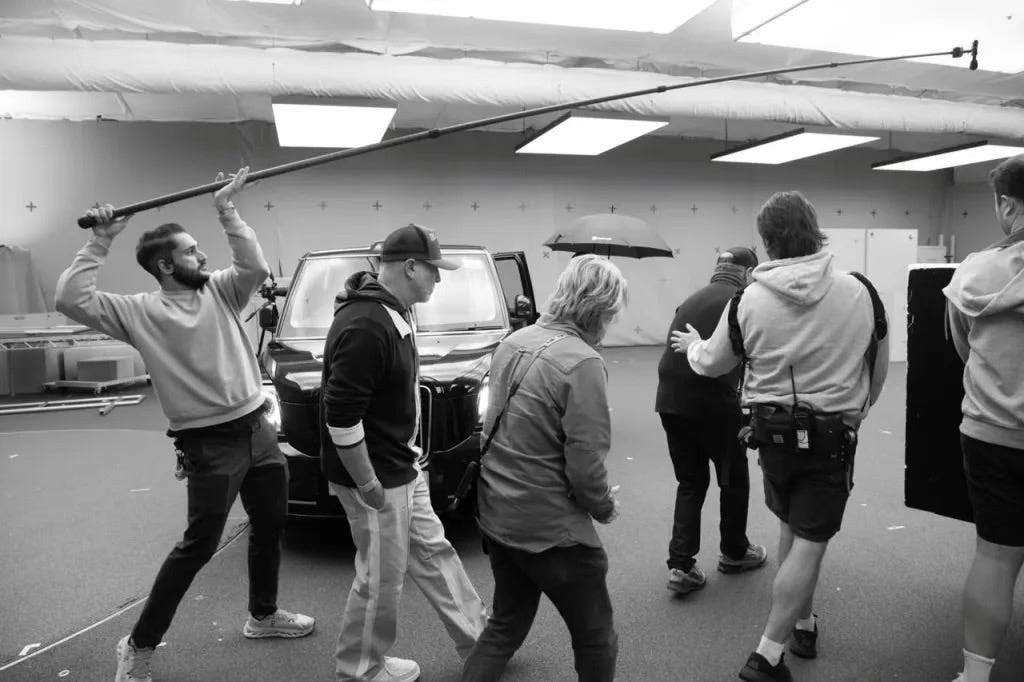
Pointing to its cost of $70 million and summing up much of the reaction online, one user on Reddit wrote, “Was it ethical? No. Does it look good? No. But did we save money? Also no.”
We’ve seen this reaction over and over with anything related to AI, and it could be that Americans in particular are reacting this way.
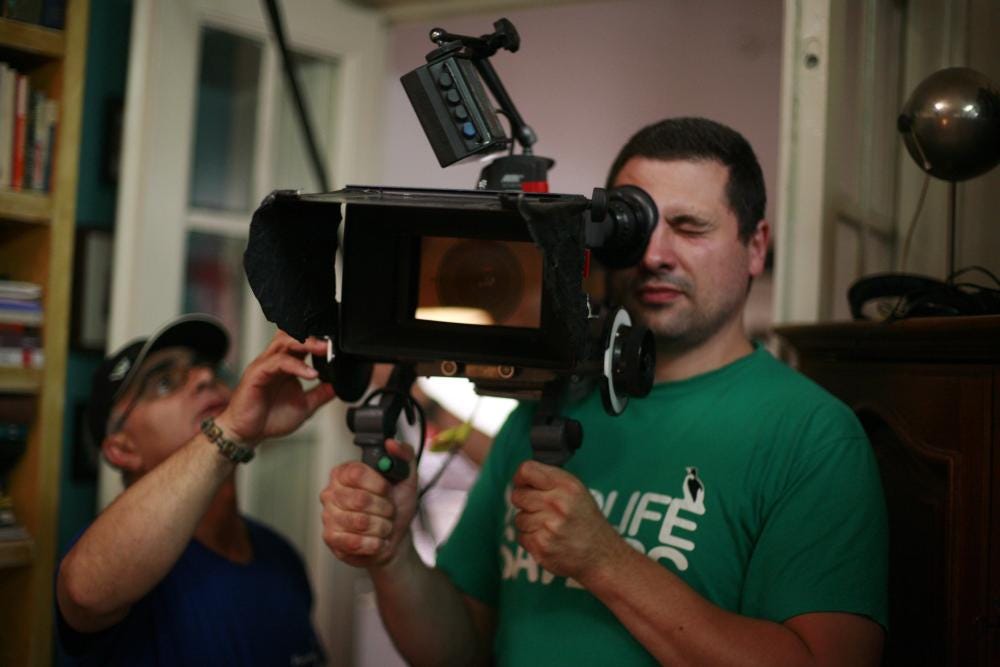
The Romanian director Radu Jude (Do Not Expect Too Much From the End of the World) recently told The New Yorker that he was surprised by the reaction he got in the US for using any amount of AI in his movie:
American film-festival audiences, Jude noted… had objected to his use of AI, given the technology’s potential erosion of film-industry jobs. “There wasn’t a single interview that wasn’t half focussed on AI,” he said. “Whereas here [in Romania], it didn’t seem like such a big deal, because we don’t have a big industry.”
The notion that AI should be taboo among auteurs hadn’t occurred to Jude, who used it in part for its amusingly janky aesthetic and in part because it allowed him to include scenes—such as a horse-drawn carriage violently flipping out of control—that he couldn’t afford to shoot.
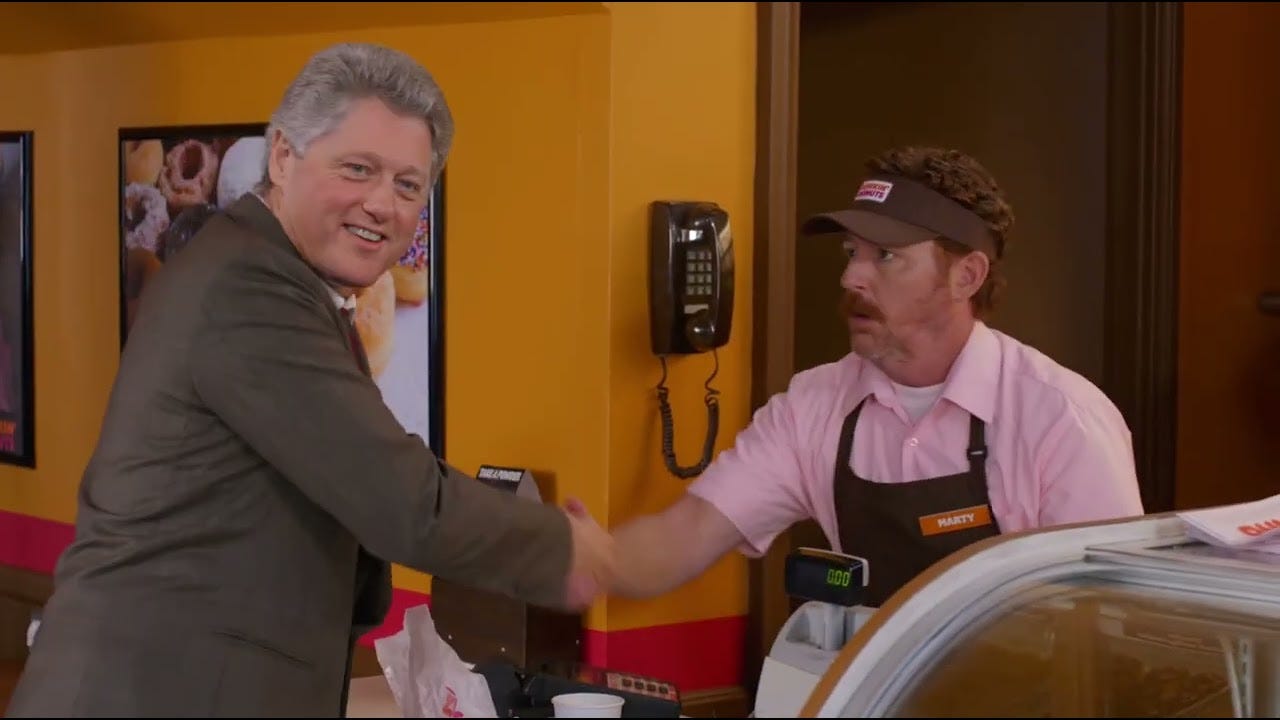
In March of this year, South Park creators Trey Parker and Matt Stone announced that they too are starting an AI company, called DeepVoodoo. After looking for someone to create a deepfake version of Donald Trump (with a tiny penis) for a project they were working on, they weren’t happy with the results. Matt Stone explains:
“A couple of effects houses in L.A. just kind of gave us the runaround. This has happened before in our career, where we go, ‘OK, well, we’ve got to go figure it out ourselves,’” Stone says. So they went online, rounded up some AI whiz kids and formed an outfit to do it themselves.
He elaborates about his view on AI:
I find that a lot of discussions about AI become tiresome. You know, ‘Put your taxes in and it can do them.’… And it’s like, ‘Cool, but a human can do your taxes.’ What we’re trying to do is something no amount of humans can do.
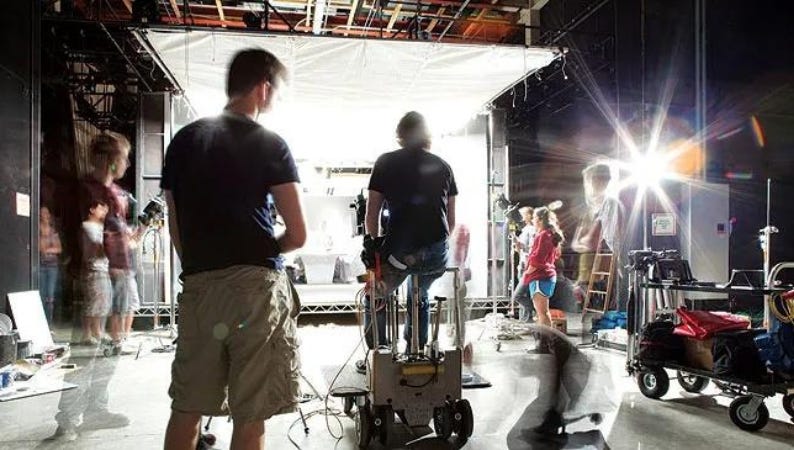
More buzz-building for AI companies has been taking place at film schools as well. Both USC and NYU have partnered with Runway. The Sundance Institute accepted a $2 million grant from Google. LMU, Chapman and others are teaching courses on generative AI.
A professor at Chapman’s film school named Tim Kashani explained to IndieWire why he thinks they need to do this:
[We] have to. I agree this has the potential to do more damage than good, but my philosophy is that’s why I want all the artists and educators and entertainers to be using it now so we don’t leave the decisions in the hands of just the technologists.
It sounds good in theory, but at worst, being included in film schools feels like a premature victory lap for AI, getting it in the hands of students because it’s assumed to be the future of cinema when that has not at all been determined.
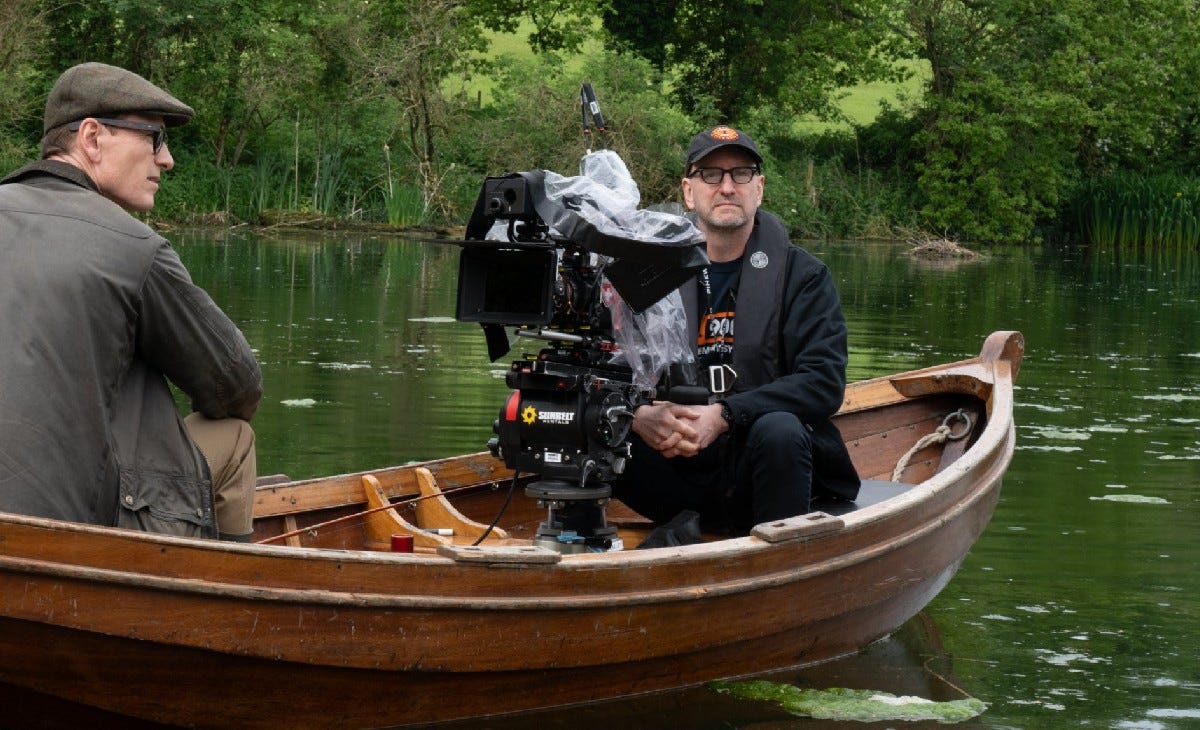
Director Steven Soderbergh (Sex, Lies, and Videotape, Traffic) has a long history of being an early adapter to new technologies (notably, with digital and prosumer cameras), and so it feels consistent for him to be experimenting with AI.
He has a documentary coming out about John Lennon and Yoko Ono, in which he created some surreal sequences with generative AI. And he has another one in the works related to the Spanish-American war, which he said in The Guardian uses “a lot of AI.” But even he allows that AI may not grow into some all-encompassing paradigm shift:
I don’t think it’s the solution to everything, and I don’t think it’s the death of everything. We’re in the very early stages. Five years from now, we all may be going, ‘That was a fun phase.’ We may end up not using it as much as we thought we were going to.
Programs like Lalal.ai can separate voice from music and noise in audio recordings quickly for people without audio expertise. ElevenLabs can create new voices or mimic ones that you input into it. These are impressive, convenient tools that are no doubt being used across YouTube, TikTok and other socials right now.
But in terms of quality, if you’re making a film in Hollywood or anywhere else, hiring actual sound mixers and voice actors, among other roles, is still the best option by far. Audiences are holding films up to a higher standard than the lazy fare that they see on their phones everyday, and it’s worth listening to them.
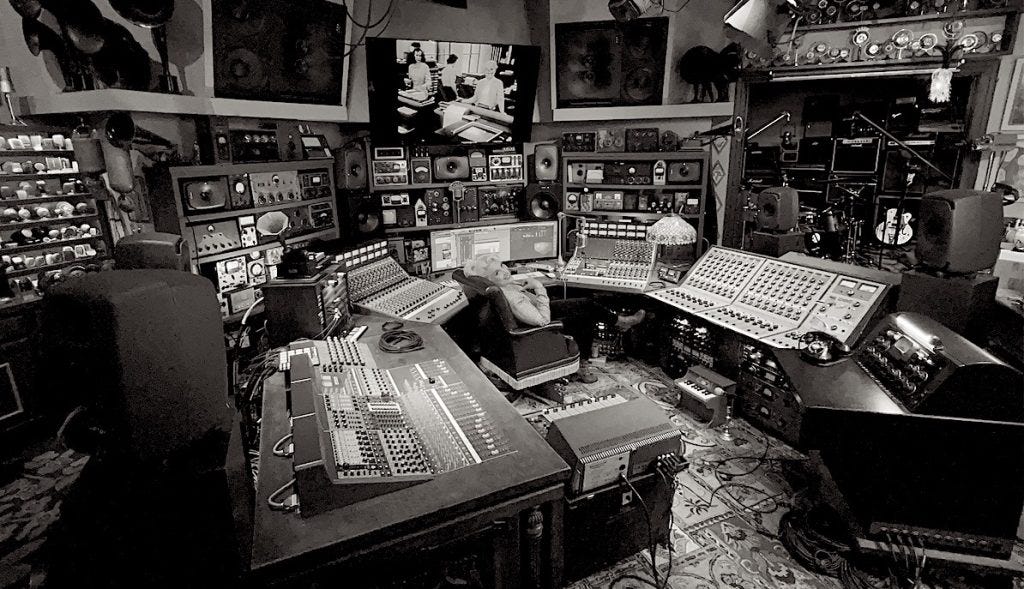
Besides, there are other, very good reasons not to overly rely on AI, including job and environmental impact, concerns about AGI and more. The piece that Cory Doctorow wrote in The Guardian is titled, “AI companies will fail. We can salvage something from the wreckage.” He explains more:
This is a key to understanding—and thus deflating—the AI bubble. The AI can’t do your job, but an AI salesman can convince your boss to fire you and replace you with an AI that can’t do your job.
I found my thinking on AI and how negative or positive it may be for the film industry going up and down while writing this. Predicting anything about it in general seems unwise, given how quickly things are changing.
But maybe it’s too easy to simply be for or against it. Some assume it will shake up how movies are made and possibly even what we understand movies to be. But right now that feels like a stretch, given how little audiences seem to appreciate it.
SOURCES
AI companies will fail. We can salvage something from the wreckage — The Guardian, Jan. 18, 2026
Netflix acquires Ben Affleck’s AI company — NPR, Mar. 6, 2026
Reese Witherspoon sparks backlash with AI comments —USA Today, Apr. 17, 2026
Reports from Doug Liman’s Big Gray AI Movie Box sound bleak — The AV Club, Apr. 16, 2026
Radu Jude, the Bard of Bucharest — The New Yorker, Apr. 13, 2026
“South Park” Skewers a Satire-Proof President — The New Yorker, July 25, 2025
Why are respected film-makers suddenly embracing AI? — The Guardian, Apr. 21, 2026
I too am a woman (like Reese!) trying to learn more about this new frontier. I am old fashioned old school, but I want to know how to swim in this big wave.